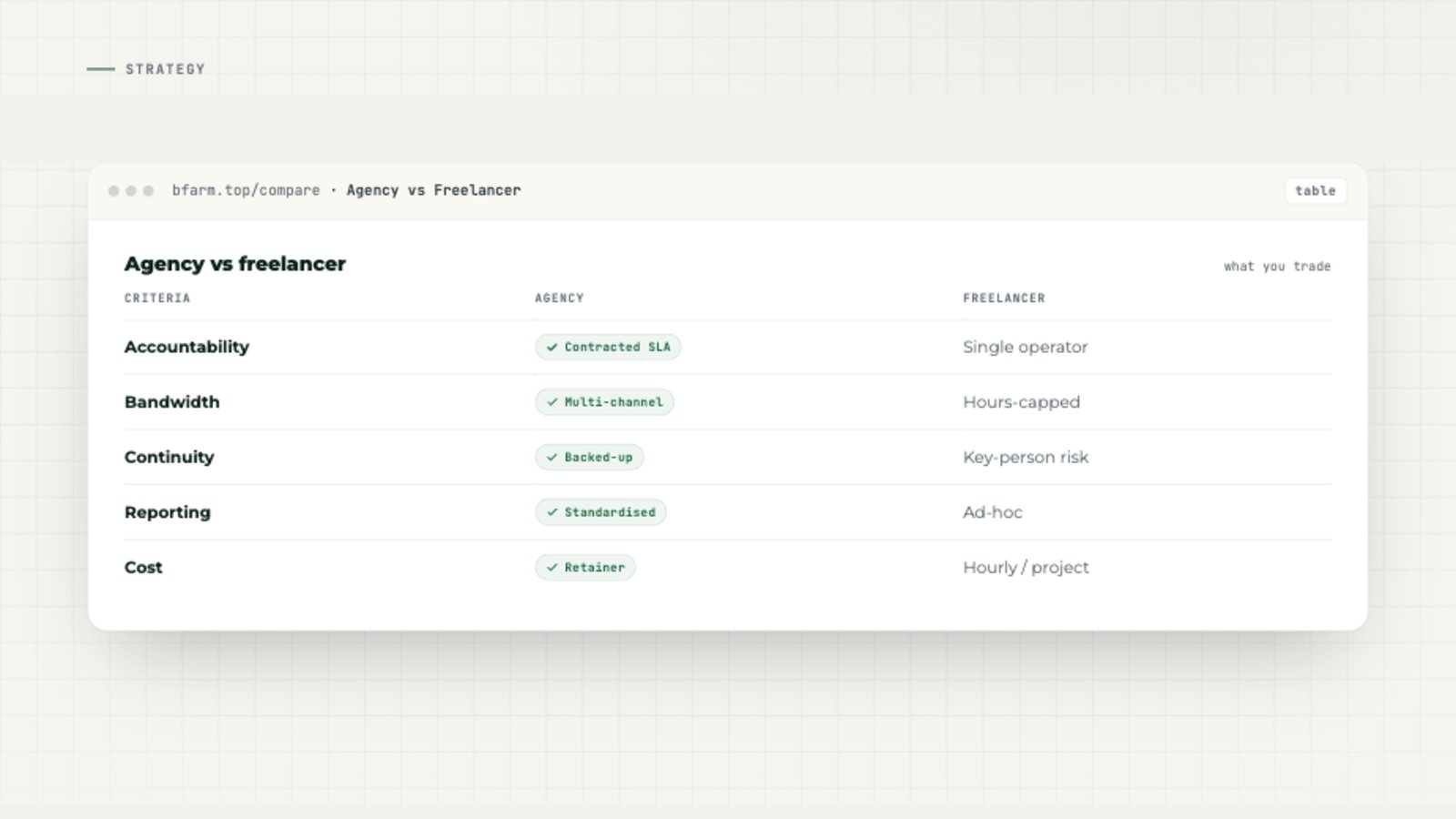
Decision framework for comparing an Amazon agency and a freelancer by written scope, ownership, least-privilege access, continuity, evidence, handoff, and current total cost. It does not use a universal budget, catalog, or timing threshold.
This guide helps Amazon sellers resolve a specific strategy bottleneck with practical steps, metrics, and decision criteria they can apply immediately.
Define the relevant source period, approved change, attribution model, traffic volume, seasonality, comparison window, and material exclusions before interpreting account-specific results.
Map recommendations to your current bottleneck, implement one controlled change batch, then compare results with related resources in Services, Portfolio, and the Free Audit flow.
BFarm uses optional analytics and advertising technologies only after you accept. Rejecting does not affect the website or forms. See the Privacy Policy.